---

---

---

---

---

---

---

---

---

4/14/12

How to take care of your pet


take care of your pet


Hygiene
this is one of the hardest parts in taking care of your pet, hygiene is very important and one must not neglect it. Dogs need washing regularly; you can use plain soap or use specialized shampoos for animals. Pet supplies such as shampoos, hair brush, conditioners and such can be easily bought in special pet stores and suppliers.

Regular exercise
One must need to regularly walk your pets, especially dogs, which are inherently very active animals. Never cage them up indefinitely, which will be cruelty to animals, give them time to exercise, a regular jog or a leisurely walk can really ensure the healthiness of not only your new additions to the home, but yourself also. Pet supplies for walking your pet like leads and chains which are durable and strong enough to restrain even the largest animal from running wildly everywhere can be bought in pet stores.

Adequate food
This is their most important need, adequate food for their sustenance. Remember that animals also need rich supply of healthy foods in order to maintain a healthy life. You can get pet supplies especially healthy selection of food in the nearest store. One must provide adequate food and not overfeed or underfeed. Many pet owners save money for their food by feeding them leftovers but this will not give them their nutritional needs, if you really want them to be good looking and healthy, give them nutritious food.
These are some of the most important points that one must consider in taking care of your pets. 

4/13/12

Discus Fish Breeding


To breed the Discus Fish, a bare bottom tall 20 or 27 gallon tank is best. A vertical surface for them to deposit their eggs on is best because discus lay their eggs just like angels. If so desired, a potted plant or two can be added to the breeding tank. This will provide shelter for the pair, but this isn’t critical. An outside power filter should be used to pick up an debris in conjunction with a sponge filter for the biological waste.
Discus come from the warm, soft, acidic waters of the Amazon River so naturally they’ll thrive if these conditions are replicated in home aquariums. The ideal conditions for breeding of discus are: the pH at 6.5 and the temperature at 86 F. if alterations need to be made to the water chemistry it should be done prior to the water being added to the tank.  Water changes should be done weekly for general maintenance, however a small water change should be done every day, or, at least, every second day. Frequent water changes increase appetite and promote mating activity in discus. This is why discus will often spawn shortly after a water change.
Good water quality must be maintained if the discus are to have large appetites.  Spawning discus should be fed frozen blood worms, frozen or live brine shrimp, Tetra Color Bits, live white worms or beef hearts.  Care must be taken with beef heart to make sure nothing is left over because it will quickly foul the water. Never feed tubifex or black worms to discus at any time, as they will introduce parasites into the tank.
A breeding pair will lay eggs as often as every week and as many as fifteen times. They will usually go through two spawning cycles a year. The eggs are free-swimming and take about 48 hours to hatch. Upon becoming free-swimming the fry will move to their parents’ sides, and start feeding off the mucous secretion that are produced by the parents during this time. The fry will feed off their parents’ sides for as long as you leave them together, but newly hatched brine shrimp should be offered after being free-swimming for five days.
Remove fry between two and three weeks after reaching the free-swimming stage. If left in with parents the fry will start ripping off scales and bits of flesh from the parents. The parents will spawn shortly after fry are removed. Put the fry in a tank of their own and feed them six or more times a day. Newly hatched brine shrimp and chopped blood worms are the best food. The first few weeks there will be noticeable daily growth. Be sure to do a partial water change every night after the last feeding in the fry tank.
For more information click here for Discus Fish Secrets

Pet GPS Systems

Pet GPS Systems
Pet GPS Systems


Pet GPS systems can be useful for pet owners who usually let their own cat or dog to run free at home. Compared with a conventional ID tag, a dog GPS system consists of a tag that can be monitored via a GPS satellite. If your pet happens to try to escape, all you need to do is actually enter the particular tag data right into a web site, and the precise locale of your dog or cat will appear onscreen. Using an internet map internet site or an auto GPS system, you can use this info to find your pet. In terms of family pet location choices, pet GPS systems are the method of the longer term.
Like a collar, dog GPS systems can be put on around the neck. Your dog GPS collar has a integrated chip, with a receiver that you simply maintain at your house or another risk-free place. If your current puppy goes missing, you just turn on the house receiver and observe the motions of the pet. You may get inside your car with the receiver to find the exact location of your pet if you wish. In this way, you can be sure your dog is rarely too much out of view.
Pet tracking systems are light as well, in order to place less of a burden about your pet's throat. Cats, for example, have tiny, tender necks, and as such can not bear the weight of a large pet GPS collar. Pets over ten pounds will make use of a light-weight monitoring system.
You may also set up a security zone about your property having a pet tracking system. When your family pet excursions outside the house, you'll receive an alert via textual content, e-mail, call, or whatever else you choose to setup. You can always make certain that the system is fully charged and able to manage whatever problems come its way through setting up the system to transmit you alerts if the electric battery is running minimal. A single downside of the alert system, nevertheless, may be the fee that some businesses demand to utilize the device. The charge usually amounts from $7.00 - $10.00 per month, and a small fee about $1.00 for each additional pet that you opt to include. Prior to settling on a final location system, ensure you look around.
Pet tracking systems are best for dog owners that do not possess a great deal of land for his or her pets to run about in outside the house. Condominium owners with animals will find pet location systems to be really useful, especially in huge cities where there are lots of dangers which pets can easily come across. A pet GPS system may not be for you if you are living on a farm or other rural area in which your dog can simply wander away. In such locations, it is also nice to let your puppy run free.
Are you considering understanding much more about pet GPS systems for your pet? You ought to certainly look into our site for additional info on Tagg Pet Tracker.


Article Source: http://EzineArticles.com/6983000

4/5/12

Natural ways you can discourage fleas in your home and on your pet

Fleas can reproduce very quickly. In just one fleas lifetime (about two weeks) she can lay hundreds and hundreds of eggs. Once these eggs hatch the larva will begin feeding on pet hair, flea feces, dried blood, or any other disgusting organic matter found in carpets, furniture, and on your pets.
After feeding this larva will spin a cocoon in which it can lay dormant for up to a year waiting for a victim. The use of pesticides on fleas while in this cocoon stage is pointless. They are almost completely immune to poisons. There is not a pesticide on the market today that can kill them completely or consistently while in the cocoon stage.
Unfortunately, even when fleas can be killed using pesticides there is still the concern over the chemicals being used. Many pesticides are in themselves an issue for the health of your family and pets.
In April 2009, advisories from the EPA regarding spot-on type flea treatments began to be released. The EPA reported receiving over 44,000 reports of adverse reactions in pets. Those reactions ranged from mild skin irritation to seizures and death (600 deaths according to the report).
Cyphenothrin and permethrin are just two products that are used in many flea treatments that have proven to be problematic, especially for smaller dogs and cats.
Believe it are not there are many simple ways to combat flea infestations which work just as good if not better than using toxic chemicals.
The first and one of the most important things you can do is vacuum. Vacuuming daily will rid your carpets of those cocoon stage fleas. The heat generated from the vacuum will also encourage them to hatch into their more vulnerable stage so that they can be dealt with swiftly. When possible use a vacuum with a bag and dispose of the bag promptly after vacuuming the floors and furniture. Yes, you need to vacuum all the furniture as well. If you have a current infestation daily vacuuming is one of your best defenses. As you will be targeting the fleas and the eggs before they have a chance to hatch and multiply.
Also keeping your pet healthy and feeding a healthy diet will help to discourage fleas. The better shape that your pet is in the less attractive they will be to nesting fleas.
Garlic can be used to rid your pet of fleas. However, garlic must be used with caution as it can be toxic to your dog when given in the wrong amounts. Discus the use of garlic for flea control with your vet to determine the right amount for your pets body weight. There are also many natural store bought mineral supplements for your pet such as diatomaceous earth.
Prevention is key. Keeping your pet bathed and brushed and performing regular full body inspection for parasites is a good idea.
There is also a number of natural alternatives to pesticides including items like cedar oil, rosemary extract, citronella and many more.
Lastly, I would like to give you one of my simplest and favorite flea prevention methods for your pets bed.
For whatever reason fleas hate eucalyptus. I like to create these cute little pouches of eucalyptus for my pet's bed. Here are simple instructions on how to make your "flea free pet bed" pouch.
You will need:
A handful of fresh eucalyptus steams (available at many hobby stores and florist.)
One 10" round cut cheese cloth or other breathable material.
One 3 inch strip of ribbon.
Tear your eucalyptus in to small 1-2 inches strips and place it in the middle of your cheese cloth. Gather the edges of the cloth to the middle creating the small pouch which encases your eucalyptus. Tie the gather with a bow using the ribbon. Couldn't be simpler.
You will want to place this pouch inside of your pets bed. In a way that your pet will not be able to access it. Place one pouch per pet bed.
Not only will this help to keep fleas off of your pets bedding it will smell nice. You will want to replace the eucalyptus in the pouch at least once a month for best results.
These are just a few of the natural ways you can discourage fleas in your home and on your pet. There are many recipes for homemade flea shampoos and sprays. There are also many natural shampoos and sprays being sold on the market.
Don't allow your pets or your family to become food for these nasty bugs this summer. Use prevention methods and be open to trying the natural alternatives for elimination and prevention of fleas. Here is wishing all pets a flea free summer.


1/7/12

Pet First Aid


By Emmy E Bill 

It is important as a pet parent to be aware of your pet's normal everyday behavior. Your pet cannot tell you when he/she is in pain or discomfort, it is up to you to identify if and when they need first aid.
Pet First Aid Kit:
To start, put together a pet first aid kit. Pet first aid kits can be purchased at many pet stores or you could ask your veterinarian for a list of items to combine or add. The kit will include items similar to a human first aid kit such as:
* Vetericyn Wound and Infection Spray
* Sterile gauze dressings
* 3% hydrogen peroxide
* Adhesive bandages
* Adhesive tape
* Rectal thermometer
* Cold pack
* Grooming clippers
* Eye wash
* Penlight
* Thermal blanket
* Antiseptic cream
The above products can be used for any pet; cat, dog or horse. Vetericyn Wound and Infection Spray, compared to the human product Puracyn and made by the same company, is a non-toxic spray that will kill 99.99% of infection and bacteria in less than 30 seconds increasing oxygen to the wound and promoting rapid healing.
It is also suggested that you include a list of phone numbers related to pet health or emergencies in the kit as well. Write down your veterinarian's office number, a 24-hour animal clinic, the national animal poison control center, humane organization, and local animal shelters. Having this list of numbers on hand will save time and benefit your pet if an emergency occurs. Make sure that everyone in your family knows that this kit is for the family pet. Decide as a family where to put it so everyone knows where to find it in the case of an emergency.
Wound Care:
In the case that your pet has bleeding wounds, use gauze to apply pressure to the area which will promote clotting. If a trip to the vet is necessary, it is a good idea to call ahead and describe the injury; letting them know when you will arrive. Doing this will allow the staff time to prepare for your pet's arrival.
Penetrating Objects:
Cats and dogs are known for being curious creatures that can get themselves into a mess of trouble at times. If your pet has been stabbed by a stick, arrow or other object and it is still in the pet, do not remove it yourself. Here is what you should do to make sure the object does not penetrate further into the animal:
1. Get a foam cup
2. Make a hole in the bottom of the cup and place it over the object
3. Tape the cup around the object, if the object is long gently cut the object 5 inches above the wound. If you do not have a foam cup or something similar
4. If you do not have a foam cup or something similar, gently wrap gauze around the object
5. Get to the vet immediately
As they say, an ounce of prevention is worth a pound of cure. Be prepared for emergencies; if you are, the emergency won't be quite as scary for you or your pet.
We love pets! Probioticsmart.com knows your pet deserves the very best care possible, and we're here to help. Visit our blog for more information, tips and stories on all things pet health. See you there!

1/1/12

Saltwater aquarium care tips


Having a saltwater aquarium can be fun. You can also find that there are some down sides to having this type of aquarium too. It is essential that you take the time to compare these options before you choose whether or not you should go with a salt water aquarium or with a freshwater aquarium.
A freshwater aquarium is easier for most to maintain because it is easier to keep clean. A saltwater aquarium will be harder to clean but it will be able to be stocked with a larger amount of variety in the fish and creatures that you can put into it. A freshwater tank will be less expensive as will the fish that you stock it with. But, again, there is more variety offered in the salt water version. And, you can even create your own living ocean in your salt water aquarium because you can put in a wide range of other sea life animals that are not fish.
You will need to do more work and invest more money into a salt water tank. You will also need to commit more time to keeping it up and running. You should realize, though, that there are many rewards offered to you in this type of tank. It will allow you to create a whole new world in your home and it can even teach children about the life under the sea. Take your time to consider your choice. Take a look at the types of fish that you would love to have in your salt water aquarium and decide if you can indeed provide for them the type of environment that they need to survive in.

Family Pet Funerals


In the past, when a pet had passed away, the family would normally hold some sort of garden memorial burial ceremony for the sake of teaching children about what happens after something or someone passes away. With the exception of some parrots, animals are not meant to be with us throughout our lives. These types of pet memorials are ritualistically similar to that of human funerals. They teach children that death is a part of life.
In some low-lying areas, communities place their dead in crypts above ground, just as the ancient Egyptians did. In other areas, for centuries, the deceased have been buried in graves. The most economical way to dispose of a body was to bury it in the ground. Coffins were created of plain wood in a rectangular type shape. At one end, the coffin was just a bit wider to accommodate the person's shoulders. Bodies were laid in coffins, lowered into a hole of similar size and covered up with dirt. Usually away from the main population, there was a designated area for coffins. These were called graveyards. Funerals for the dead were held in the graveyards.
Family pet funerals are similar. For a small pet, a shoe box may serve as a make-shift coffin. For larger animals, a comparable size hole was dug in the backyard, and the body, often in a large plastic bag or covered with a tarpaulin, was lowered down into the hole. Dirt would be back-filled into the hole, covering the deceased pet. A pet gravemarker usually consisted of a cross made of twigs, a flower or wreath, and a personal pet item.
In times past, many people were buried with no gravemarker. Unmarked graves could be unearthed years later. In present day, gravestones or headstones (named from the placement of the stone over the "head" of the body) are used to mark the burial site. They are engraved with names and the dates that span the life of the family member.
Eventually, pet lovers decided their pets deserved to be honored with more than sticks and flowers. People are not the only ones deserving of headstones. Pets deserved them as well. Today, there are hundreds of different pet memorials and urns for pets. Both are available with engraved sentiments, poems, names and dates. Many can be used for burial, but some are meant to be displayed. Some of the pet memorial urns are so beautiful, one might think them treasured antique pieces of art.
Times have changed over the centuries. What we are teaching our children about death through the loss of pets needs to be brought into modern times. Exquisite marble pet memorials and pet urns should now be part of these lessons. Perhaps the new tokens of honor will bring families comfort and beauty into pet grieving ceremonies.
For pictures and more information on pet memorials and pet urns, please visit: http://perpetualpetmemorials.com
Article Source: http://EzineArticles.com/?expert=Barb_J_Williams

12/31/11

Two critical factors in the care of Discus

 .
Discus Care Management Skills and Organization
It starts by proper organization and planning. This is all about finding a way to let the discus fish recognize the owner and interact with you. The discus fish is unique because it does not only swim, eat or hide. They are fun to have because they can also watch a person across the room. They are aware of what is going around the room and it is easy to learn to love them due to their personality. In order to win the affection of this fish, one must learn discus care to be able to train the fish to greet you when you are near and for them to eat their food out of your hand. This fish is very interactive, which makes it interesting and lovable to have.
Understanding Discus Care Feeding Patterns
It would be important to understand the feeding patterns of a young discus fish from a mature discus fish. One must understand that fish would normally die not out of hunger but out of excessive eating, which is why it is best to learn the proper eating proportions in order to avoid overfeeding them.
The younger ones would need more and would tend to be active during feeding time. But as they grow older, the need for eating would decrease. This type of fish in intelligent and would require attention and c are in order to win. The parents of the discus fish would raise their young together.
In order to be good at discus care, one has to be able to understand what they need for breeding, feeding, daily needs and plan a way to meet these goals without overshadowing other goals. A starting hobbyist does not have to worry about the costs because they can plan methods to make it affordable. What is important is to check the parameters of local tap water and to check if the pH is suitable for the discus. If this is the case, it would be good to use soft water and combine it with tap water in order to create desirable water condition for the fish.
Remember that some local water tap in the US are not good for the discus care due to the chloramines being used to disinfect it. It would be better to have the water filtrated and dechlorinated. Remember to keep the school of discus fish in groups and exclude different varieties of fish. For discus care to be effective, there should be at least 5 or more discus fishes in a water tank because one discus fish cannot stand alone.
Tom Rollins a Discus Fish expert. If you want to learn more about discus care, visit http://www.discusfishpro.com/.

12/25/11

5 Ways To Reduce Pet Allergies


Create A Pet-Free Zone---We both know this is easier said than done, but it can really mean the difference between keeping your pet and enjoying it, or being miserable all the time and possibly having to find a new home for it.
The clean space will have less pet-related stuff on surfaces and in the air. Being able to relax here will give your body some down time that it needs to rejuvenate. It will also let you relax emotionally because you know that you are less likely to have a flare-up because the air has fewer triggers.
Clean Frequently---With a warm-blooded pet you are never going to get rid of all of the hair, dander, and fur. But with regular and thorough cleaning to can greatly reduce the number of allergens which will give you relief from symptoms.
Bathe Your Pet---In some cases this works well, but you will have to decide whether this is a feasible option based on your individual pet. Consulting with a veterinarian before you begin bathing is crucial.
Bathing your pet can sometimes lessen the amount of dander it shed. And since it is the protein in the dander that is such a potent allergy trigger, anything you can do to get rid of it is worth a try.
The right kind of cleanser and the frequency are crucial to your pet's health. Using the wrong kind of product can cause health problems for your pet, and can make the dander situation worse.
Some pets will object to this regimen more than others. So you will have to weigh the possible benefits against your pet's possible disdain for baths.
Wash Bedding Regularly---Dander is a food source for dust mites. So it is crucial that you keep your bed linens laundered as well as your pet's special blanket, rug, and/or bedding.
These should be washed at temperatures that exceed 160 degrees Fahrenheit in order to kill mites. Washing the linens gives double benefits . Reducing the dander reduces the food source for mites, and since dust mites are also an allergen you are successfully eliminating two of the most potent indoors allergens known.
Use A HEPA Air Cleaner---Using an air purifier with a HEPA (an abbreviation for high efficiency particle arresting) filter is an effective, low maintenance, and non-invasive way to eliminate airborne particulates.
As its name suggests, it is highly efficient at removing airborne particles. In order to be designated as a HEPA it must be able to trap 99,997 out of every 10,000 airborne particulates that are.3 microns or greater.
The really good thing about this type of filtration is that not only will it remove pet-related pollutants such as dander, and hair; but it will also remove more normal indoor irritants such as dust, dust mites, mold and mildew spores, seasonal pollens as well as airborne bacteria and viruses.


10/29/11

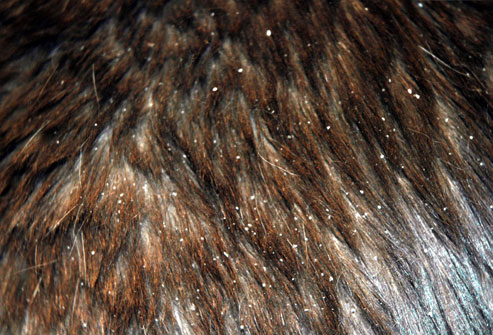
What to do about cat dandruff ?


Several causes of cat dandruff and what you can do to help;
 A poor diet which lacks moisture and oils, usually a result of relying on dry food, can cause a deficiency in omega 3 fatty acids, moisture and other vitamins and minerals imperative for a shiny, healthy coat. This cause of dandruff can be helped by supplements and simply supplying your cat with a quality canned cat food approved by the AAFCO (aafco.org) which regulates nutritional levels for animal food.
 If your cat is not grooming often enough, or not at all, because they may be overweight, ill or elderly, you can lend a hand by grooming them daily. This will help stimulate and distribute the natural oils which can help with a dry coat.
  Heated forced air in the home during the winter can dry out your cat's skin as well as yours. Try using a humidifier in the home to help combat dry air.

Sunburn dandruff might not be actual dandruff but a result of sunburn and the skin peeling. You can apply a topical cream, but mainly it's a matter of waiting for the burn and flakiness to subside. In extreme cases kitty should see their vet. Brew and cool some green tea and rinse kitty with it (if they'll let you). The antioxidants in the tea will help soothe and heal the sunburn.
 Seborrhea or scaly skin can be treated with medicated shampoos available at your local pet stores or vet. Seborrhea is caused by abnormal skin cell production making the skin flaky and dry as well as oily and scaly.
 Mites cause a condition called Cheyletiellosis or walking dandruff. This type of mite is usually transmitted by other pets in places such as shelters, boarding or grooming businesses. It can also be transmitted to humans or from humans to pets, so the whole home, as well as other pets, must be treated to avoid re-infestation. Poor nutrition can lower your cat's immune system making them more prone to mites.
 If after trying the at home treatments and you still notice your kitty has dandruff you should seek your veterinarians help so that any serious conditions can be eliminated.